"Your parcel is on hold. Pay ₪4.90 in delivery fees to release it." If you got a text like that this week, you're in good company. Cyber Monday falls on Monday, November 30, 2026, three days after Black Friday, and it's also the scammers' busiest week. The ₪4.90 is just bait. What they want is the card details you'll type into the page they send you.
So how do you shop this week without second-guessing every link? There's mainly one habit that does most of the work, plus a few that help at the margins.
The only habit that really matters
Go to the store yourself. Type the address, or open the store's app, and don't tap a link that arrived by SMS, email or a social media ad. Almost every trick this week, a fake store for a familiar brand, a "courier" asking for a small payment, "customer service" on WhatsApp, starts with a link someone else sent you.
If you're expecting a parcel, check the tracking number on the official Israel Post or store website or app. That's also the advice of Israel's National Cyber Directorate, which has been warning about these texts for years.
Two small things about the address itself. One different letter is enough, ksp-sale or amaz0n. And the padlock in the browser only means the connection is encrypted. A scammer's site has a padlock too.
The SMS code is yours alone
The second common trick is a "representative" who calls or writes asking for the code you just got by SMS "to verify the order". There's no situation in which a store or bank needs that code from you. Whoever asks for it is trying to get into your account. According to UK experts, scammers already use AI-generated voices and videos, so even a call that sounds completely professional proves nothing.
As for paying: credit card or digital wallet, not a bank transfer and not Bit to a private person you met on a marketplace. With a credit card you have a way to ask the card company to reverse a transaction that went wrong. With a transfer, the money is simply gone.
Buying from a foreign site: the "pay in shekels" button
Here's something few people notice. When you pay a foreign site in dollars, most Israeli credit card companies add a foreign-currency transaction fee: 2.9% in Isracard Direct's tariff, 3% in First International Bank's. On a $100 order, about ₪333 at the Bank of Israel representative rate of November 20, 2026 (₪3.326 to the dollar), that's roughly ₪10 extra.
Some sites offer to let you pay "in shekels" at checkout to avoid that. Sounds good, until you check the rate they show. The conversion is then done by the merchant or its payment processor, and their rate is often worse than the fee you'd have paid. I'd compare the shekel amount against the representative rate and pick whichever is cheaper. Also, paying a foreign merchant in shekels doesn't always spare you a fee. Some card companies charge one on that kind of transaction too. It's worth a look at your card's tariff.
The same principle applies to VPN services, by the way. NordVPN and Surfshark bill Israelis in dollars, ExpressVPN in shekels. We went through it in detail in our piece on renewal prices.
What a VPN does for shopping, and what it doesn't
Lots of people shop on the go, on the bus or in a café. On open Wi-Fi, whoever is on the same network can try to see or tamper with your traffic. A VPN encrypts the connection between your phone and its server, and in that situation it's a good layer of protection. More in our public Wi-Fi guide.
But a VPN doesn't know a store is fake. If you've landed on a scammer's site, it will deliver your card details to them encrypted and perfectly safe. To the scammers. It doesn't stop a spoofed SMS either. Some services add blocking of known malicious sites, NordVPN calls it Threat Protection, and that helps against sites already on the lists. A site that went up yesterday, not necessarily.
And the trick of "changing country to get a lower price"? Payment is usually decided by your billing address and card, not your IP, and faking your location can breach the site's terms. I wouldn't count on it.
If this week is your time to buy a VPN anyway, our first pick is NordVPN, and we've gathered every deal with shekel prices in our Black Friday 2026 guide.
If you've already been caught
First, call your card company: block the card and ask to cancel the charge. Then change the password on the account you used, and on any other site where the same password repeats. Then report it.
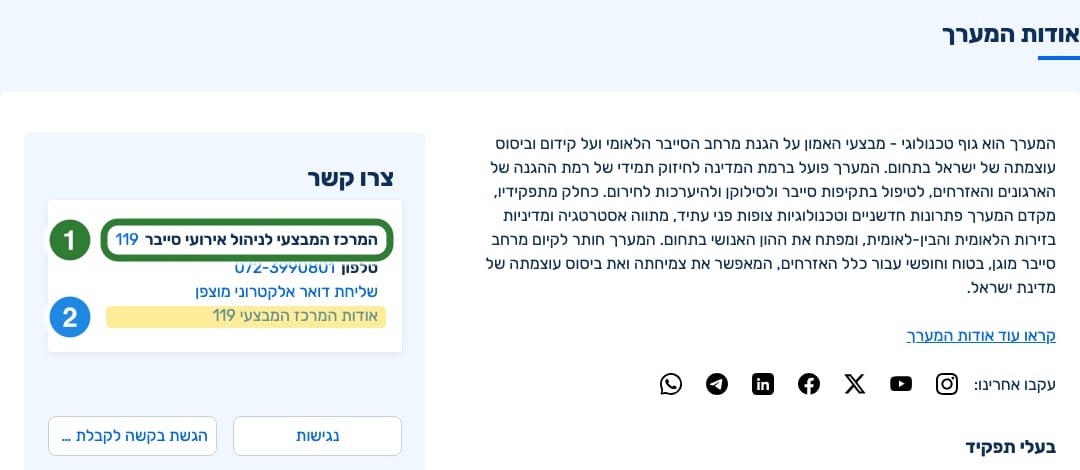
① In green: the operational center for cyber incidents, on the short number 119. That's where you report a spoofed message or a fake site, even if you weren't harmed, because reports help get them taken down. ② In yellow: the link to the hotline's own page, with the other contact channels. For a scam where money was stolen, also file a police complaint.
And if it's a real purchase you simply regret, that's a different story. For distance sales, Israel's Consumer Protection Law usually gives you 14 days to cancel, with a cancellation fee of up to 5% or ₪100, whichever is lower, and a few exceptions. Check the store's terms before you ship the parcel back.
Sources
The conversion fee figures come from Isracard's and First International Bank's tariffs, and the exchange rate from the Bank of Israel. The common tricks are based on warnings from the National Cyber Directorate and from consumer bodies in the US and UK.
- www.gov.il/he/departments/israel_national_cyber_directorate/govil-landing-page
- www.jdn.co.il/news/2701611
- www.funder.co.il/article/121514
- us.norton.com/blog/online-scams/cyber-monday-7-tips-for-safer-online-shopping
- www.insurancebusinessmag.com/uk/news/cyber/cyber-monday--seven-traps-lurking-online-558389.aspx
- digital.isracard.co.il/globalassets/isracard/pdf/forms/taarifon_doar.pdf
- www.fibi.co.il/media/bwxl02kb/חלק-6-כרטיסי-אשראי-31.pdf
- www.boi.org.il/roles/markets/exchangerates